
What Factors Affect the Value of a Used Truck?

Two trucks can be the same year, make, and model and still sell for very different prices. Mileage, mechanical condition, maintenance history, location, configuration, and even current demand can all change what a buyer is willing to pay.
That is especially true with work trucks and commercial vehicles. Buyers are not only looking at how a truck looks. They want to know how much useful life it has left, what repairs may be coming, whether it fits their operation, and how easily they could put it back to work.
If you are wondering, “What is my truck worth?” looking at the asking price of a similar truck online only tells part of the story. Before you sell your used truck, it helps to understand the key factors buyers consider and what can raise or lower your offer.
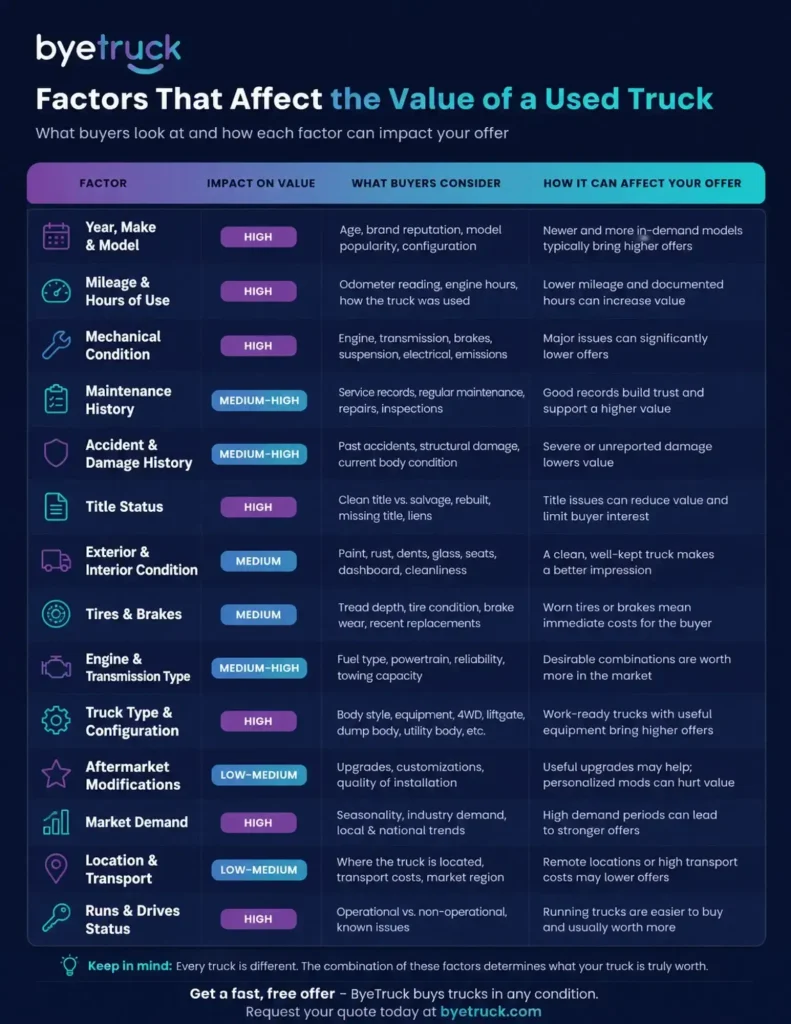
1. Year, Make, and Model
The year, make, and model give buyers their starting point when estimating a truck’s value.
Newer trucks generally have more resale value because they tend to have updated technology, newer components, and fewer years of wear. However, age alone does not determine the final price.
Certain makes and models also hold their value better because buyers know them, parts are easy to find, and there is strong demand for them in the used market. A popular work truck with a proven engine and transmission combination may attract considerably more interest than a less common configuration from the same year.
The exact model matters too. Buyers may be willing to pay more for a truck that has the payload, towing capacity, cab configuration, drivetrain, or body style they need.
This is why comparing your truck to another vehicle based only on its model year can produce a misleading estimate.
2. Mileage and Hours of Use
Mileage is one of the first numbers most buyers look at when evaluating a used truck.
In general, lower mileage means less wear on major components and more expected life remaining. As mileage increases, buyers begin factoring future repairs and replacement costs into their offers.
But mileage needs context.
A highway-driven truck with consistent maintenance may be in better mechanical condition than a lower-mileage work truck that spent years making short trips, idling on job sites, hauling heavy loads, or operating in stop-and-go traffic.
For some commercial vehicles, engine hours are just as important as miles. Dump trucks, utility trucks, tow trucks, and other vocational vehicles may spend long periods operating while stationary. A truck can therefore show relatively low mileage while still having thousands of operating hours on the engine.
When valuing a commercial truck, buyers will often look at both mileage and how the vehicle was used.
3. Mechanical Condition
A truck that starts, runs, drives, shifts properly, and does not have major mechanical problems will usually be worth more than an otherwise identical truck that needs repairs.
Some of the most important mechanical components include:
- Engine
- Transmission
- Cooling system
- Suspension
- Brakes
- Steering
- Drivetrain
- Axles and differentials
- Electrical system
- Emissions equipment
A minor repair may have little impact on value. A failing engine or transmission can have a much larger effect because replacing either component can cost a buyer significant time and money.
Warning lights matter as well. Check engine lights, emissions faults, transmission warnings, and other dashboard alerts create uncertainty. Even when the truck still drives, a buyer may reduce the offer to account for the possibility of a more expensive problem.
That does not mean you have to repair every issue before selling. In some cases, the cost of making major repairs can be higher than the additional value those repairs add to the truck.
4. Maintenance and Service History
A well-maintained truck is easier for buyers to trust.
Oil-change records, repair invoices, inspection reports, and documentation showing major component replacements can help demonstrate that the truck has been properly cared for.
A complete maintenance history is particularly valuable on higher-mileage vehicles. If a buyer knows that the transmission was recently rebuilt, the cooling system has been serviced, or expensive emissions components have already been replaced, some of the uncertainty surrounding the truck disappears.
Records can also help explain mileage. A commercial truck with 300,000 miles and detailed maintenance documentation may present less risk than a similar vehicle with fewer miles but no service history.
Before selling, gather whatever documentation you have. You do not necessarily need records for every oil change the truck has ever had, but proof of regular maintenance and major repairs can help buyers understand its true condition.
5. Accident and Damage History
Past accidents can reduce a used truck’s value, but the size of the impact depends on the severity of the damage and how well it was repaired.
Minor cosmetic damage is very different from structural damage.
A replaced bumper, dented bed, or repaired body panel may have a relatively small effect on a work truck. Frame damage, significant collision repairs, flood damage, or a previous total loss can affect value much more.
Current damage matters too.
Rust, broken lights, cracked glass, missing body panels, major dents, bent bumpers, damaged cargo areas, and other visible problems all influence how a buyer evaluates the vehicle.
For work trucks, buyers may be more forgiving about cosmetic wear because scratches and dents are normal. Mechanical and structural condition usually matters much more than whether the truck looks perfect.
6. Title Status
A clean title generally gives a truck the strongest resale position because ownership is easier to transfer and buyers have fewer concerns about the vehicle’s history.
Other title situations may lower the truck’s value or reduce the number of interested buyers.
These can include:
- Salvage titles
- Rebuilt titles
- Flood titles
- Missing titles
- Damaged titles
- Outstanding liens
- Ownership documentation problems
A salvage or rebuilt title does not automatically make a truck worthless. It simply changes how buyers evaluate the vehicle.
The same applies to a truck with title problems. Some private buyers may avoid the extra paperwork completely, while specialized truck buyers may still be willing to purchase the vehicle.
At ByeTruck, we buy vehicles with salvage titles and can also help sellers with certain title issues.
7. Exterior and Interior Condition
Appearance is not everything, especially on a commercial truck, but it still affects value.
A clean truck sends a different message than one filled with trash, covered in heavy grime, or showing years of neglected cosmetic damage.
Buyers may look at:
- Paint condition
- Rust
- Dents and scratches
- Windshield and glass
- Seats and upholstery
- Dashboard condition
- Interior electronics
- Lights
- Mirrors
- Doors and locks
- Bed or cargo-area condition
Normal wear is expected on an older work truck. The biggest concern is usually whether cosmetic issues suggest deeper neglect.
Before selling, basic cleaning can help present the vehicle accurately. Expensive bodywork or repainting, however, may not always produce enough additional value to justify the cost.
8. Tires and Brakes
Tires are easy for a buyer to inspect and expensive to replace, which makes them an important part of a truck appraisal.
A truck with a good set of tires is closer to being ready for immediate use. A truck with bald, damaged, mismatched, or badly aged tires creates an immediate expense for the next owner.
The effect becomes even more noticeable on vehicles with multiple axles or commercial tires, where replacement costs can add up quickly.
Brake condition works in much the same way.
If the truck clearly needs brake work, tires, or both, a buyer may deduct those expected expenses from the offer.
You do not necessarily need to install a complete new set immediately before selling. Instead, compare the likely cost of replacement with how much additional value the work could realistically add.
9. Engine and Transmission Type
The exact powertrain can make a major difference in value.
Two trucks that appear almost identical from the outside may have completely different engines, transmissions, towing capacities, fuel types, and operating costs.
Diesel trucks, for example, are often attractive to buyers who need high towing capacity or plan to put significant mileage on a vehicle. However, the condition of the diesel engine and its emissions system becomes especially important as the truck ages.
Commercial buyers may also have strong preferences for particular engine and transmission combinations because their mechanics are familiar with them or because they already operate similar trucks in their fleet.
A desirable configuration in good condition can therefore help a truck maintain demand even when it has higher mileage.
10. Truck Type and Configuration
A truck’s value depends heavily on what it was built to do.
A standard pickup is evaluated differently from a semi-truck, dump truck, box truck, refrigerated truck, tow truck, utility truck, or cab-and-chassis vehicle.
Commercial buyers may pay more for equipment that allows them to put the vehicle to work immediately.
Depending on the truck, valuable features can include:
- Four-wheel drive
- Sleeper cab
- Liftgate
- Dump body
- Refrigeration equipment
- Utility body
- Flatbed
- Tow equipment
- Heavy-duty suspension
- PTO equipment
- Specialized storage
- Towing packages
The condition of that equipment matters just as much as its presence. A refrigerated body with a non-functioning refrigeration unit, for example, does not provide the same value as a complete working setup.
11. Aftermarket Modifications
Modifications can either increase or decrease a truck’s value.
Useful upgrades that appeal to a wide range of buyers may help. Highly personalized modifications can have the opposite effect.
A commercial ladder rack or tool-storage system may be valuable to another contractor. An extreme suspension lift, unusual wheels, custom wiring, or heavily modified engine may narrow the buyer pool.
Buyers also want to know whether modifications were installed correctly.
Poor electrical work, emissions modifications, homemade fabrication, or changes that affect reliability can make a buyer more cautious.
Do not assume the amount you spent on modifications will be added directly to the truck’s resale value. An upgrade is only worth as much as the next buyer is willing to pay for it.
12. Local and National Market Demand
Your truck does not have one permanent value.
Demand changes.
Certain trucks are easier to sell in particular regions, industries, and seasons. A four-wheel-drive pickup may attract more interest in an area with harsh winters. A contractor-ready work truck may be more desirable where construction activity is strong. Specialized commercial vehicles depend even more heavily on whether businesses currently need that type of equipment.
Broader market conditions matter too. When comparable used trucks are scarce, sellers may have more leverage. When buyers have dozens of similar vehicles to choose from, they can become more selective.
Timing also plays a role. In our previous article, we explain how truck demand can change throughout the year and why spring and early fall may offer stronger selling conditions for certain vehicles.
That is why a valuation based on a listing you saw six months ago may no longer reflect what buyers are paying today.
13. Location and Transportation Costs
Where the truck is located can affect what a buyer is willing to pay.
If a buyer has to transport a non-running truck hundreds of miles, that expense becomes part of the transaction. Remote locations, difficult access, and specialized towing requirements can all influence the final number.
Location also affects demand. The same truck may attract more buyers in one part of the country than another.
This becomes particularly important with damaged or non-running commercial trucks. A private buyer may be interested in the vehicle but unwilling to arrange transportation.
When comparing offers, look at the total amount you actually receive after towing, transportation, listing costs, and other fees rather than focusing only on the advertised selling price.
14. Whether the Truck Runs and Drives
Running condition is one of the clearest dividing lines in used truck value.
A vehicle that can be driven away is simpler for the buyer. A non-running truck requires towing and presents more uncertainty because some problems cannot be fully tested until repairs are made.
Still, a non-running truck can have significant value.
Its engine components, transmission, axles, body, wheels, tires, specialized equipment, and other parts may still be useful. Even severely damaged vehicles retain material and component value.
If your truck does not run, be as specific as possible about what happened. “Needs an engine” gives a buyer more useful information than simply saying “doesn’t work.”
And if you are unsure what the problem is, say so rather than guessing.
Ready to Sell Your Truck?
Request a free quote from ByeTruck and find out what your truck is worth today, with no obligation. We’ll handle the paperwork, removal at no cost, and pay on the spot anywhere you’re located in the country.
How Can You Increase Your Truck’s Value Before Selling?
You do not need to restore an older truck to showroom condition.
Focus on inexpensive steps that make the truck easier to evaluate and reduce uncertainty for the buyer:
- Clean out the cab, bed, and cargo area
- Wash the exterior
- Gather maintenance and repair records
- Find the title and ownership documents
- Check fluid levels
- Replace inexpensive missing or broken items
- Take clear photos
- Write down the mileage and engine hours
- Be upfront about known mechanical problems
- Identify major components or equipment that have recently been replaced
Be cautious about spending thousands of dollars on repairs simply because you plan to sell.
A $5,000 repair does not automatically increase your truck’s selling price by $5,000. Before doing major work, find out what the vehicle is worth in its current condition and compare that number with its likely value after the repair.
Sometimes repairing the truck makes sense. Other times, selling it as-is is the better financial decision.
Get an OfferGet a Fair Offer for Your Used Truck With ByeTruck
There are plenty of ways to estimate a truck’s value, but an estimate does not put money in your pocket.
You still need a buyer.
At ByeTruck, we purchase semi-trucks, pickups, box trucks, dump trucks, vans, fleet vehicles, and other commercial trucks in running, damaged, and non-running conditions. We also take care of the logistics, with nationwide service, free pickup and towing, and paperwork assistance.
Our process is straightforward: provide us with information about your truck, review your offer, schedule pickup, and get paid when we collect the vehicle.
Instead of spending weeks comparing listings and answering messages from private buyers, you can quickly find out what your truck is worth and decide whether our offer works for you.
See what trucks like yours have sold for by browsing our recent purchases.
Frequently Asked Questions
What is the biggest factor that affects a used truck’s value?
There is no single factor that determines every truck’s value. Year, mileage, mechanical condition, model, and current market demand are usually among the most important. Major engine or transmission problems can have a particularly large impact because buyers have to account for expensive repairs.
Does high mileage make a truck worthless?
No. High mileage lowers the value of many trucks, but it does not make a vehicle worthless. Maintenance history, mechanical condition, engine hours, truck type, and demand all matter. A well-maintained higher-mileage commercial truck can still have significant value.
Is it worth repairing my truck before selling it?
It depends on the repair. Low-cost maintenance and minor fixes may help make the truck more attractive, but major engine, transmission, body, or emissions repairs may cost more than the additional value they create. Get an estimate of the truck’s as-is value before committing to expensive work.
Does a salvage title reduce truck value?
Usually, yes. A salvage or rebuilt title can reduce the number of potential buyers and may lower resale value compared with an equivalent truck with a clean title. However, a salvage-title truck can still be sold, particularly to buyers that regularly purchase damaged vehicles.
Are commercial trucks valued differently from regular pickups?
Yes. While basic factors such as age, mileage, and condition still matter, commercial truck buyers also focus heavily on configuration, engine hours, payload capacity, specialized equipment, maintenance history, and whether the truck can immediately go back into service.
Can I sell a truck that doesn’t run?
Yes. Non-running trucks still have value based on their condition, usable components, equipment, parts, and overall market demand. ByeTruck purchases running and non-running trucks and offers pickup for vehicles it buys.
How do I find out exactly what my used truck is worth?
Start by gathering the year, make, model, mileage, engine hours if applicable, title status, maintenance history, condition, and details about any mechanical problems. Comparable listings can give you a rough range, but an actual buyer’s offer gives you a more realistic picture of what someone is prepared to pay.
If you want to skip the guesswork, request a no-obligation quote from ByeTruck and find out what your truck could be worth today.
 Free Ebook
Related Articles
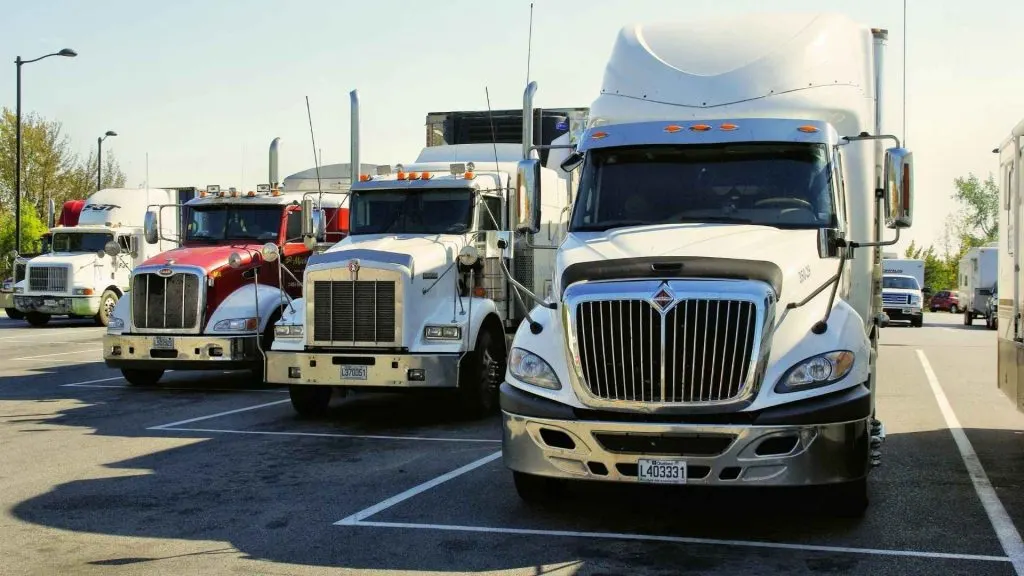
When is the Best Time of Year to Sell My Truck?
The best time to sell a truck can swing your payout by hundreds or thousands of dollars. Truck demand rises and falls across the year with tax refunds, work seasons, and the weather, so selling when b…

How a Florida Contractor Sold His Diesel Work Truck in Five Days
Every truck owner has a different reason for selling. Some are upgrading to a newer model, while others want to reduce maintenance costs or free up cash for their business. Whatever the reason, unders…
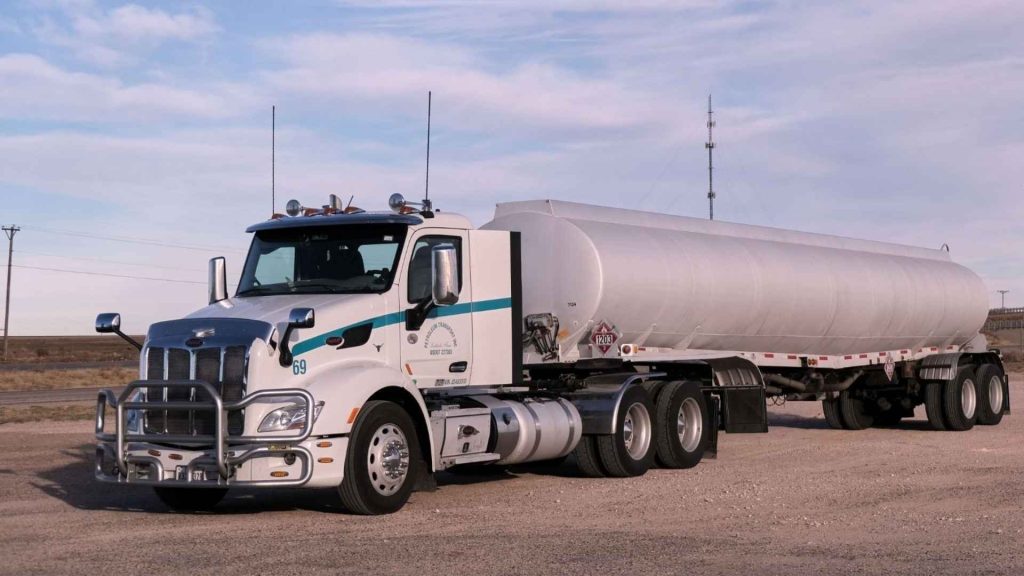
10 Scams to Avoid When Selling Your Truck
Selling a truck can be a great way to free up cash, upgrade your vehicle, or reduce the size of your fleet. Unfortunately, it can also attract scammers looking to take advantage of sellers. From fake …
How to Sell Your Truck the Same Day
If you need to sell your truck the same day, you’re not alone. Whether you’re replacing a work vehicle, closing a business, moving across the country, or simply need cash quickly, waiting …
Best Tips to Sell Your Truck for Maximum Value
Selling a truck isn’t just about finding a buyer. It’s about timing, positioning, and understanding what actually drives value in the commercial vehicle market. A rushed sale usually leads to low offe…

How to Sell Your Fleet Vehicles Quickly and Profitably
Managing multiple vehicles can make fleet sales stressful, especially if some are older, damaged, or part of a mixed-use fleet. This guide explains how businesses can sell fleet vehicles efficiently, …

How to Sell Your Van Fast and For The Best Price
Whether you own a single van for personal use or operate a fleet of commercial vans, selling your vehicle can feel complicated. Questions about value, paperwork, timing, and the best buyers are common…

How Can I Sell My Semi-Truck Fast?
Selling a commercial vehicle is a high-stakes transaction where every day of downtime costs you money in insurance, storage, and depreciation. Whether you are an owner-operator retiring your rig or a …